
The Importance of asking “why?”
Written by Janine Lythe
Can you tell us a little about your aviation background and current role?
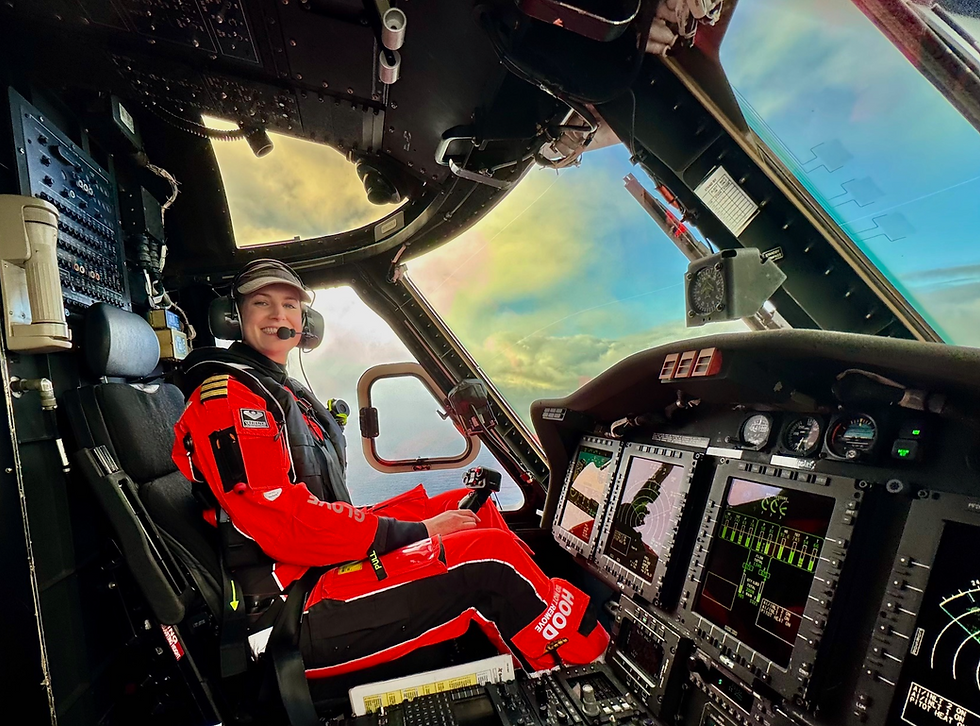
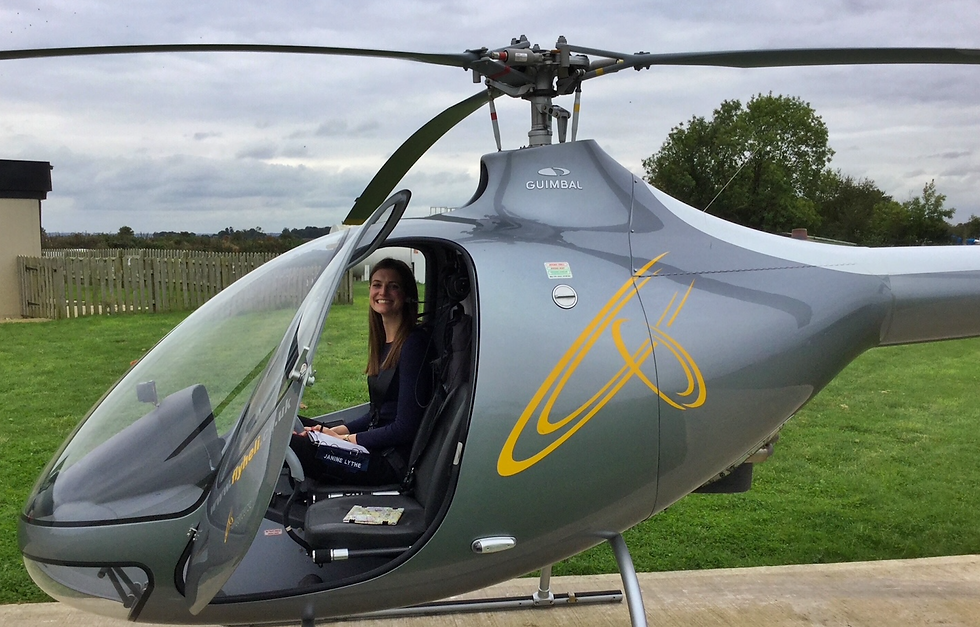
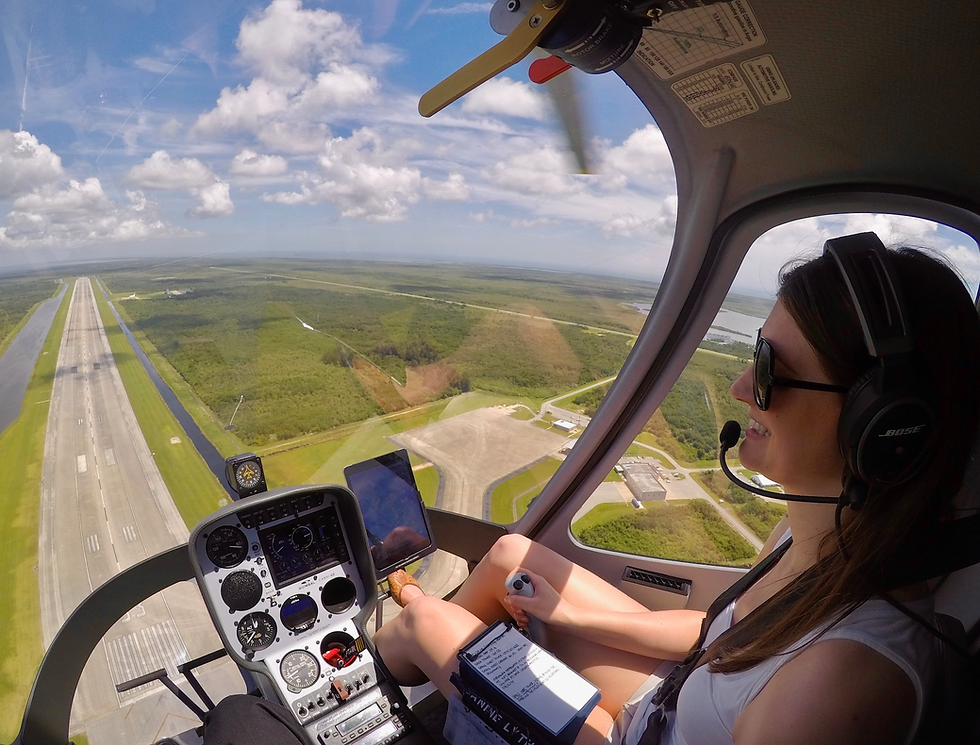
I began my aviation journey while working a full-time job, so the modular route for my PPL(H) was great for me. After a lot of saving and a life of working, studying, and flying, I was fortunate enough to win a scholarship to complete my CPL(H). I then gained my FI(H) and left my job to start my first flying role as a Flight Instructor - it was such an amazing feeling! Shortly after I won an IR(H) sponsorship from Bristow, which was a life changing opportunity.
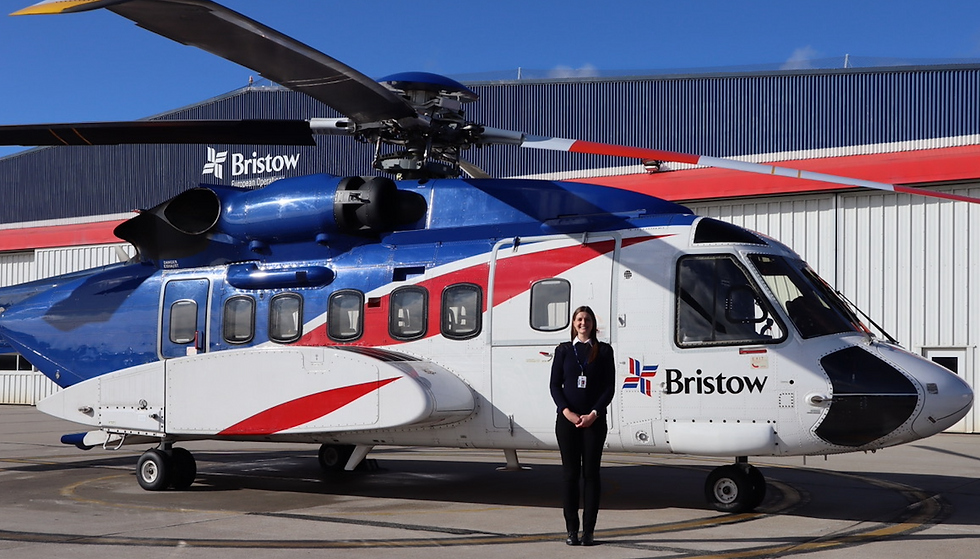
I flew the S92 in the North Sea for 5 years and had the pleasure of learning from some absolutely amazing Captains. Last year I started working for NHV in the Irish Sea on the AW169. I gained my promotion to Captain in December, which is throwing lots of new challenges my way that I am really enjoying.
What first drew you to aviation as a career?
Aviation wasn’t an obvious choice for me. I didn’t grow up knowing what I wanted to be. I studied Forensic Science and Criminology at university and then fell into a career as a project manager. After many years, I realised I needed to make a change.
After a long period of soul searching, I decided to go for a helicopter trial lesson. I was completely sold, and the rest is history!
Even though I sometimes wish I had found flying sooner, I do feel grateful to have had exposure to other types of jobs. It really puts the pros and cons of being a pilot into perspective. I’ll never take it for granted.
You’re also a co-founder of Pilots Who Ask Why, what is PWAW?
My partner, Jop and I started our website, Pilots Who Ask Why for pilots to have a place to share and access real life stories about life as a pilot. Not just the polished side, but real events, decisions, and reflections.
We’ve also made it a place where we hope learning is a lot more fun and straightforward than your average aviation literature or textbook.
We share our personal reflections in our Notes from the Cockpit series, and we learn from accidents in our Why Spotlights, which are bitesize articles of accident reports, to make learning from them as easy as possible.
Not everyone enjoys going through manuals and reports, but we really do!
What inspired you to start Pilots Who Ask Why?
In aviation we’re trained really well in procedures, limits, and threat management.
The things that actually shape you as a pilot though, are often the human moments: the judgement calls, the assumptions you didn’t realise you were making, mistakes, error, and sometimes the accidents you read about and quietly think, “That could have been me.”.
Pilots Who Ask Why is a way to talk about those things, and to learn as much as possible from our own experiences, as well as pilots who are much more experienced than us.
A lot of aviation writing can feel quite formal, but some of the most valuable things I have learnt were from conversations with other pilots just talking honestly about flights. The good ones, the uncomfortable ones, and the lessons you only realise after you’ve landed.
What do you hope PWAW brings to pilots and students entering aviation?
Starting a career in aviation can feel like a minefield sometimes, but learning from those who have done things before us is an amazing way to find your way, both before and after you become a pilot.
There is so much aviation information out there, but not a lot of it is particularly inspiring or easy to digest, especially as a newcomer.
We hope we make starting, learning and growing as a pilot clearer, with less noise, in a more personal way.
What has being part of PWAW taught you personally? Has it influenced the way you fly or learn?
Through PWAW, and in particular working with Jop, I have realised the importance of personal reflection and capturing this in some way (a personal journal, an article!).
Before aviation and PWAW I was terrible for dwelling on things. Not something that works in a cockpit at all, but it’s also not beneficial to life in general.
I am so much better now at taking the good and the bad and channelling it into something positive through learning. I try to capture the great days and the hard days in a journal, which is so helpful to look back on and share with others.
If there’s one mindset or habit you’d love to see more pilots develop early in their careers, what would it be?
If I had to pick one thing, it would be emotional intelligence. It’s such an underrated skill that will supercharge your career prospects and success in this industry.
A lot of people start their flying career thinking being a good pilot means flying the numbers or acing an approach. These are important of course, but they’re only one side of the coin.
The other side is the human element: understanding ego, leadership, communication, and crew resource management. Nail these skills and you’ll go far!


Comments