_logo(WHITE).png)
Navigating the pressure of flight training
Written by Nadeen Qatameen
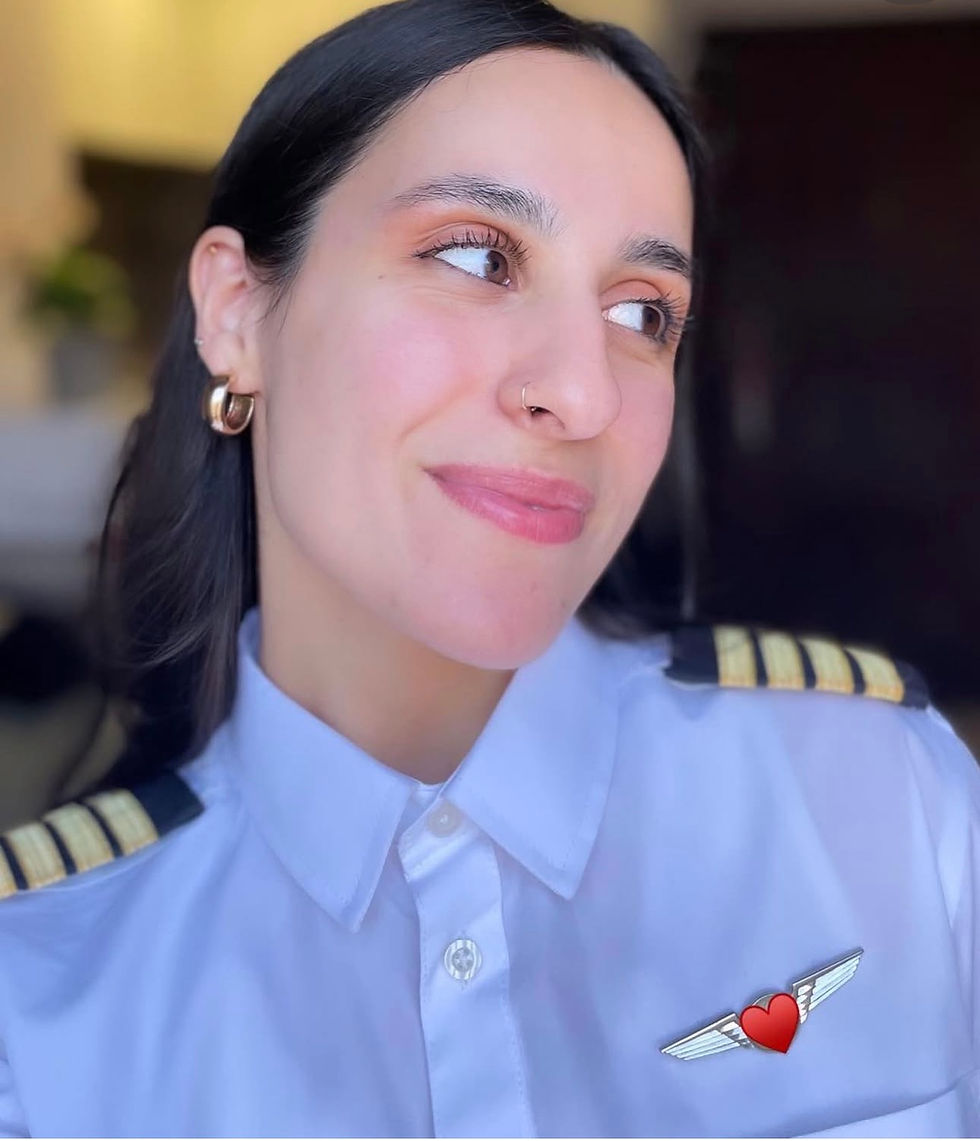
One thing I didn’t expect when I started my journey in aviation in 2018 was just how alone imposter syndrome could feel. From the outside, flight training often looks confident, disciplined, and linear. The uniforms are pressed, the checklists are followed, and the progress seems measurable. What we don’t see and rarely talk about are the internal struggles many student pilots carry every single day: self-doubt, fear of not being “cut out for it,” constant comparison, and the quiet pressure to always perform.
I know this because I lived it.
My Introduction to Aviation (and Self-Doubt)
Like many students, I entered flight training excited, motivated, and determined to succeed. I loved flying, I worked hard, and I genuinely wanted to be there yet almost from the beginning, a small voice crept in asking whether I truly belonged.
I watched other students grasp concepts faster, progress more smoothly, or appear effortlessly confident on the radio. Meanwhile, I replayed every mistake in my head long after the engine shut down. I interpreted normal learning curves as personal shortcomings and temporary setbacks as evidence that I wasn’t good enough.
What made it harder was how invisible these feelings were. Everyone around me seemed to be coping just fine. No one openly admitted to struggling, so I assumed I was the exception.
How Self-doubt shaped my training experience
Self-doubt doesn’t always show up as fear. Sometimes it shows up as overpreparation, perfectionism, or the need to prove yourself constantly. For me, it meant tying my self-worth to every lesson outcome and every instructor comment.
A bad flight didn’t feel like a bad flight it felt like confirmation of a deeper flaw. I questioned whether I was behind, whether I was progressing “fast enough,” and whether I deserved to be in the cockpit at all.
Looking back now, I realize how much mental energy that consumed. Flight training already demands focus, resilience, and adaptability. Carrying imposter syndrome on top of that only makes the journey heavier.
How I learned to work through It
At the time, I didn’t have a clear name for what I was experiencing. I just knew I felt inadequate despite evidence to the contrary.
What slowly helped was perspective and an experienced pilot who believed in me even when I didn’t…
Conversations with peers I trusted. Quiet moments of honesty with myself. And eventually, recognizing that discomfort is not a sign of failure but instead it’s a sign of growth.

I began to separate performance from identity. A rough lesson didn’t mean I wasn’t capable. It meant I was learning. I learned to ask better questions instead of hiding confusion, and to view feedback as information, not judgment.
Most importantly, I stopped expecting confidence to come before competence. In aviation, confidence is built after repeated discomfort, not before it.
What I know now and What I’d tell my student self
With the experience I have now, I would tell my younger self this:
Feeling behind doesn’t mean you are behind. Struggling doesn’t mean you don’t belong. Doubt doesn’t disqualify you it often means you care.
Every competent, confident pilot you admire once sat where you are now, questioning themselves. The difference isn’t that they never doubted it’s that they kept going anyway.
Progress in aviation is rarely linear. Some lessons click instantly; others take time. Neither defines your potential.
How flight schools and Instructors can do better
Now, as an instructor, I make a conscious effort to talk about this openly not to lower standards, but to remove unnecessary shame.
When instructors normalize struggle, students stop internalising it. When we acknowledge that learning plateaus, bad days, and self-doubt are part of the process, students are more likely to persevere instead of quietly giving up.
Flight schools can support this by:
Encouraging open conversations about mindset and mental resilience
Training instructors to recognize confidence issues, not just technical gaps
Creating environments where questions are welcomed, not judged
Emphasizing long-term development over constant comparison
Aviation demands excellence but excellence grows best in environments that balance accountability with empathy.
Final Thoughts: You belong HERE
Aviation doesn’t just test skill. It tests mindset.
And the more aware we are of the invisible battles student pilots face, the better we can support the next generation not just as pilots, but as confident professionals.
If you’re currently in training and feeling like you don’t belong yet: you do. And if you’re in a position to teach, mentor, or lead: please talk about the hard parts.
It matters more than we realize.


Comments